Sunday, 21 July 2013

Restaurant Gordon Ramsay

Bouquets are okay and candy is dandy but nothing says 'Happy Anniversary' to a foodie like a fabulously indulgent three-course lunch at Gordon Ramsay's flagship restaurant in Chelsea. One of only two restaurants in London (and only four in the UK) to hold three Michelin stars, Restaurant Gordon Ramsay is headed up by partner Chef Patron Clare Smyth, 2013 Good Food Guide Chef of the Year and recent MBE.

Unassuming at first glance and quietly elegant within, Restaurant Gordon Ramsay is situated on Royal Hospital Road, just around the corner from the Chelsea Physic Garden. The recently refurbished dining area is intimate and unfussy and I was relieved to find myself in varied company, having feared an entire roomful of CEOs and Chanel-clad ladies who lunch. In fact, the ambience was relaxed and genuinely welcoming - unlike the starchy self-importance of some other 'top' restaurants.

Greeted and seated, we decided to go with the impressive set lunch menu - considering the location, actually pretty good value at £55 per person.  The first indication of three-star status was the seamlessly professional and utterly charming maitre d' Jean-Claude; think of a conductor directing an entire orchestra of highly-trained musicians with the tiniest flick of a baton or raised eyebrow. His staff ensured we were settled quickly, checking on drinks, any allergies or dislikes and whether it was a special occasion within minutes of us arriving at the table and he personally welcomed every guest with genuine warmth. Our waiter was friendly and knowledgeable, happy to discuss ingredients and preparation methods as we placed our order. We were then brought an amuse bouche of pea and mint mousse with ricotta and baby vegetables which was fabulous; light but absolutely full of flavour and a lovely summery start to the meal.

For the first course I had the tartlet of confit salmon, shaved fennel, radishes, grilled piquillo pepper, quail's egg, rocket and basil, while my companion had the lobster, asparagus and herb tortellini with broad beans, tomato and lobster consommé. If the first bite is with the eye, my first bite of the tartlet was sensational. It was beautifully presented, a larger portion than I had expected (for a sense of actual proportions in the photograph, think about the size of a quail's egg) and delicious from start to finish; a perfect mix of fresh, delicate seasonal flavours. I nabbed a bite of the tortellini, which was also excellent - get used to meal envy here, because you're going to have a real pang every time you see a plate set in front of somebody else.

At the risk of stating the obvious for a Michelin-starred restaurant, the wine list is extensive and not cheap; prices run to four figures. On the more unexpected side, the Head Sommelier (and 2012 UK sommelier of the year) is younger than you might expect and, despite his obvious passion for wine, was refreshingly unintimidating and non-judgemental about us deciding against a bottle and ordering instead the £6 glasses of Bordeaux Blanc sec - which, incidentally, was really good. The selection of breads - sourdough, bacon and onion brioche, wheaten and pretzel - was excellent, readily replenished and served with a choice of salted or unsalted butter.

For our mains we had the miso glazed cod with black quinoa, squid, grilled shiitake mushrooms and lapsang souchong broth, and the roasted rabbit loin with Bayonne ham, salted baked turnips, toasted hazelnuts and pickled mustard seed. Again, these were as beautifully presented as they were delicious, with the individual flavours coming together perfectly; our waiter served the broth at the table, encouraging me to smell it first to appreciate the smoky subtlety. I finished my glass of wine and idly wondered how long it would take a member of staff to notice and offer another. The answer? Forty seconds.


Dessert was roasted pineapple with coriander financiers (tiny French almond cakes), coconut sorbet and vanilla cream for me and banana parfait, peanut butter mousse and bitter chocolate sandwich with caramelised bananas for my companion. These were both wonderful, although I don't really have a sweet tooth; if I hadn't been starting to feel quite full, I would have been almost homicidally jealous of the diner at the next table who ordered the cheese. Available at a small supplement, the cheese trolley selection looked and smelled as good as any I have seen in France and was served with a range of accompaniments from grapes to breads and oatcakes.


Coffee ordered, extremely happy with the fabulous food and outstanding customer service, and starting to feel a little regretful that this remarkable experience was drawing to a close, I caught a glimpse of something spectacular being placed on a nearby table. A lidded silver dish was uncovered to oohs and ahs, and a theatrically billowing cloud of dry ice. Before I could question a passing waiter, the same dish arrived at our table; it was four bite-size balls of strawberry ice cream encased in white chocolate. These were swiftly followed by a glass tray of the most delicately rose-flavoured turkish delight and rich chocolate ganache, on tiny cake servers to avoid those pesky cocoa stains. Yes they really do think of everything.

As if that wasn't enough, we then had a delectable chocolate truffle dessert, complete with single candle, discreetly delivered to the table as a gift for our celebrations. A wonderful touch - but the best was yet to come. Maitre d' Jean-Claude approached the table, leaned close and whispered the question every foodie wants to hear: 'Would you like to see the kitchen?'

Expecting the dining room to be the elegantly gliding swan above the water and the kitchen to be the furiously paddling legs beneath, we entered the inner sanctum. Clare Smyth's team were unexpectedly calm and apparently unhurried, although in the way the workings of a Swiss watch would be: meticulously synchronised. Clare took a minute out to chat although she and her Head Chef personally check each and every dish before it reaches the diners and the standards are beyond exacting.

Restaurant Gordon Ramsay deserves every one of its three Michelin stars; the food is exquisite and if anyone wants to learn about customer service, then these guys have it absolutely nailed. This was an outstanding dining experience: not fussy, not pretentious, just totally focused on the diner and delivering more than they promise - this is the dining equivalent of being ushered to the front of the queue, past the rope and bouncers and straight into the VIP lounge.


Yours, lunching it large, Girl About Town xx


Restaurant Gordon Ramsay on Urbanspoon

Square Meal

Saturday, 9 March 2013

Doctors, Dissection and Resurrection Men

The unpredictable weather may not be inspiring you to stroll idly around the city streets at the moment but it's absolutely perfect for planning a day in a museum. The Museum of London should be high on your list anyway but there is a must-see exhibition on right now (until 14th April) with a true and wonderfully gruesome London tale behind it. Ready to immerse yourself in the murky depths of nineteenth-century London? Are you sitting comfortably? Then let's begin . . .

In the summer of 2006, Museum of London archaeologists stumbled across an unmarked burial site at the Royal London Hospital in Whitechapel, believed to have been used for patients who had died and whose bodies had been unclaimed. What they found was unexpected and disturbing: many of the graves contained bones from several different bodies, some human and some animal, all showing clear evidence of dissection and anatomical study. Even more disquieting was the fact that the graveyard was used between 1825 and 1841 - despite the fact that before the Anatomy Act of 1832 it was illegal to dissect any cadaver other than that of an executed criminal.

The exhibition sets the background perfectly, with a finely-balanced blend of history and theatre. Medical science was still in its infancy: the accepted treatment for a broken limb was amputation and as there were no anaesthetics any surgery was a brutal experience, with many patients dying of blood loss or shock. Speed was vital: for this, surgeons needed a thorough knowledge of human anatomy, and for this they needed fresh corpses to practise on. The only legal source was hanged murderers from the gallows and competition was fierce.

Grave-robbing became prevalent, with a fresh adult corpse fetching over five times the average weekly wage. Grieving relatives would take shifts watching the graves of the newly-interred, watchmen with dogs patrolled the cemeteries and special iron coffins designed to secure their contents from theft became popular with those who could afford them. As so often, the poor were most at risk; many could not afford burial costs and even for those that could, it was common for several bodies to be in one relatively shallow grave - easy pickings for the so-called 'resurrectionists'. The exhibition has a fascinating diary belonging to a body snatcher, detailing the phases of the moon - careful preparation for planning a raid under cover of darkness.

In an age when many of us carry an organ donor card, it is difficult to appreciate the dread and horror that nineteenth-century Londoners would have felt at the prospect of dissection. At that time dissection was a terrible punishment meted out only to the vilest criminals; mob outcries and riots at public executions had prevented the bodies of those hanged for relatively minor offences being taken, resulting in an official policy of using executed murderers only. In addition, the commonly-held religious belief of eventual resurrection on the Day of Judgement led to a fear of the body not being whole for the afterlife. With donation almost unheard of and the graves becoming harder to rob, some resurrectionists looked to another supply - the living.

In a practice made infamous by Edinburgh's Burke and Hare, London's poor and homeless were now in danger of being 'befriended' before being drugged, murdered and sold for dissection. The case that made headlines, and ultimately led to the passing of the Anatomy Act, was that of London 'Burkers' Thomas Williams, John Bishop and James May - and their victim, the Italian Boy. The corpse's  intended buyer at King's College was alerted by the fact that the body was 'suspiciously warm' and kept Bishop and May talking until police arrived. They were arrested, the house that Bishop and Williams rented in Nova Scotia Gardens was searched, and several items of clothing found in a well. Bishop admitted that he and Williams would offer lodgings to those sleeping rough, drug them with rum and laudanum, then tie a rope around their feet and pitch the unfortunate victim headfirst down the well to drown whilst they went out drinking at a local tavern.

Bishop and Williams were convicted and hanged for murder. In a karmic twist, as executed murderers their bodies were  then sent for dissection - one of the more macabre exhibits is pieces of tattooed skin said to be from their bodies. Another is a plaster cast of murderer James Legg, whose corpse was taken fom the gallows, crucified and then flayed to expose the muscles. A cruel and terrible punishment for some unimaginable crime? No, merely a way for artists and sculptors of the time to settle an argument as to whether depictions of Christ's crucifixions were anatomically accurate or not. Whatever the intended purpose, it is a dramatic sight that will stay with you.

The exhibition ends in a brightly lit, clinical and modern look at where we stand today with medical science and politics and a film where young Londoners discuss how they feel about what happens to their body after death. It's not for the squeamish (or children under 12) but it is a fascinating, thought-provoking and excellently-presented exhibition and I really enjoyed it. Check online for discounts.


Yours, delving into London's dark past just for you,
Girl About Town xx


Sunday, 16 December 2012

Bone Daddies

If you haven't heard of Bone Daddies yet, it's not a rib shack or a steakhouse as the name might immediately suggest; it's a newcomer to London's burgeoning noodle scene. However if you're a foodie then you'll already know that Aussie Ross Shonhan, formerly head chef at Zuma and Nobu, has combined his love of Japanese food with the party-hard vibe of Soho and opened a no-reservation ramen restaurant where the pork bone broth base is cooked for 20 hours.

This place is also nothing like the exquisite, temple-food calm of nearby udon restaurant Koya; Bone Daddies is loud and kicking, with classic rock blaring and conversations buzzing from Soho's finest, squashed together at communal tables and knocking back the sake and cocktails. The tiny interior is stripped back and decorated with pictures of Japanese rockabillies; you're not going to want to perch on one of the stools for an entire evening but it's a perfect place to start a night out, or to end one.

We started with the soft shell crab. This was an immediate winner; deliciously crisp with a delicately soft interior, served with a punchy green chilli and ginger dip. Now is probably a good time to tell you that if you're not a fan of spicy food, let the staff know and ask for recommendations as the flavours here are big, bold and in your face.

The staff, on the other hand, are incredibly friendly and chatty and will happily help with anything you need. To drink we had some warm sake, served in a flask sitting in hot water, plus a fresh carrot and ginger juice; both were good.
For mains we went for the T22, a chicken bone broth base with soy ramen, chicken and cock scratchings - don't worry, they are in fact little nuggets of crispy fried chicken skin and add an interesting crunch to the dish - and the Tantanmen, dan-dan noodles piled in a chicken bone broth with pork mince, sesame, chilli and bok choy.

There are lots of options for customising your food; you can order extra meat, vegetables, egg or noodles from the menu (we did try an extra egg in the T22 but I doubt you'd want extra noodles) plus there is a fabulous range of condiments on the table including garlic and presses, and a sesame grinder. You can even order a pipette of pork fat to add flavour but I honestly don't think it needs it; my Tantanmen was wonderful, a rich and creamy sesame  base and a big chilli kick, perfectly cooked egg and spicy pork adding taste and texture.

Bone Daddies is a welcome addition to a part of London already blessed with some of the best restaurants around; my visit was an early evening pre-drinking stop, but I can see this becoming a staple for late night hangover prevention. If you start with the homemade pickles or miso soup and stick to tap water you can slurp your way through any of the warming noodle dishes and be on your way for less than £15 - just what you need at this time of year.
http://bonedaddiesramen.com/


Yours, rocking the ramen,
Girl About Town xx

Square Meal
Bone Daddies on Urbanspoon


Monday, 10 December 2012

Masters Tennis at the Royal Albert Hall

Fellow tennis fans will commiserate with the long wait for January; rejoice, then, in the Masters Tennis at the Royal Albert Hall. Not only can you get to see real legends of the game such as John McEnroe, Mats Wilander and Pat Cash but more recent retirees Henman, Ivanisevic, Moya and Enquist will also be holding court. Tickets vary dramatically in price but start from a measly £17.50 so even if you're feeling mugged by the festive season, you can beg an early Christmas pressie and get yourself down to one of the most stunning tennis venues ever. Speaking of which, I feel a slight historical diversion coming on . . .

The Royal Albert Hall is a Grade 1 listed building, a distinctive London landmark, truly gorgeous inside and out, and literally majestic. Opened in 1871 as a place for the public to discover and appreciate art and science, it was championed by Queen Victoria's consort, Prince Albert, and paid for by the profits of The Great Exhibition of 1851. Albert was passionate about social reform as well as art and science and saw promoting their understanding as a way of both celebrating and continuing England's industrial success (are you listening, Prime Minister?).

Londoners have much to thank him for (Albert, not the Prime Minister); the entire complex of South Kensington museums - and the ethos that museums are places of self-education and should be free to the public - are down to his influence. Albert was also responsible for bringing the traditional Christmas tree to England; he had a tree brought to Windsor Castle in 1841 and decorated it with glass ornaments, candles, fruits and sweets. A published engraving picturing the Royal family around the tree soon made it a popular yuletide tradition. Albert died suddenly of typhoid in 1861, at the age of just 42. Queen Victoria never recovered and remained in mourning for the next forty years, until her own death. At the official opening of the Royal Albert Hall she was so overcome with emotion that her son had to speak for her. The Hall was named in his memory and has been in continuous use since that day; one of London's grandest music venues, it has hosted performances from Wagner to Sinatra and Hendrix to Jay-Z.
http://www.royalalberthall.com/

Transformed from concert hall to tennis arena, the Hall retains its grandeur but makes for an intimate setting. This is a very relaxed event where players have fun and interact with the audience, but there is steel beneath the showboating; these guys can still really play, and the sight of Ivanisevic thundering down a trademark serve at 128mph is pretty impressive. We saw Moya vs. Santoro and Britain's Jeremy Bates against Guy Forget (standing in for an injured Ivan Lendl) but for me the highlight was seeing self-styled court jester and indisputable genius Mansour Bahrami.

If you're not familiar with Bahrami's exhibition doubles play, get on YouTube now; it's not a patch on seeing him live, but it will give you an idea of his natural comic talent and his ridiculously skilful tennis. Amongst his many skills he can serve holding six tennis balls in one hand, rally with an opponent on the opposite side of the net whilst facing his own doubles partner and teach Federer a thing or two about the hot-dog. Make a note in your new diary for the first week of December 2013; I'll see you there.


Yours, realising that to tennis players love means nothing,

Girl About Town xx

Tuesday, 27 November 2012

Skate at Somerset House

If you're still struggling to get into the festive mood, I have the solution; grab your gloves, sling on a scarf, head off to Somerset House and Skate!

Skate is the annual transformation of the courtyard of Somerset House into one of London's more glamorous outdoor ice rinks. Glide (or wobble) your way across the ice between the majestic, beautifully-lit Somerset House and a huge, twinkling Christmas tree; it's enormous fun, with everyone bundled up against the cold and hanging on to their friends in a vain and desperate attempt to defy gravity.

Ticket prices vary according to date and time (although they go up from 8th December - be quick!) and include skate hire and an hour on the ice. Do make sure to get there early though, as there can be a bit of a queue to pick up the skates and get them on. It's a good idea to either wear or take a pair of thickish socks for best fit and cosy toes; this is ice, after all! You can book online; if there's no availability, nip in early on the day and pick some up from the box office - a small number are held back for sale on site. I haven't been yet, but the club nights sound fabulous; late night sessions with top DJs on the decks and the rink-side lounge open for post-skating mulled wine or cocktails. Full details are on the website here:
 http://www.somersethouse.org.uk/ice-rink

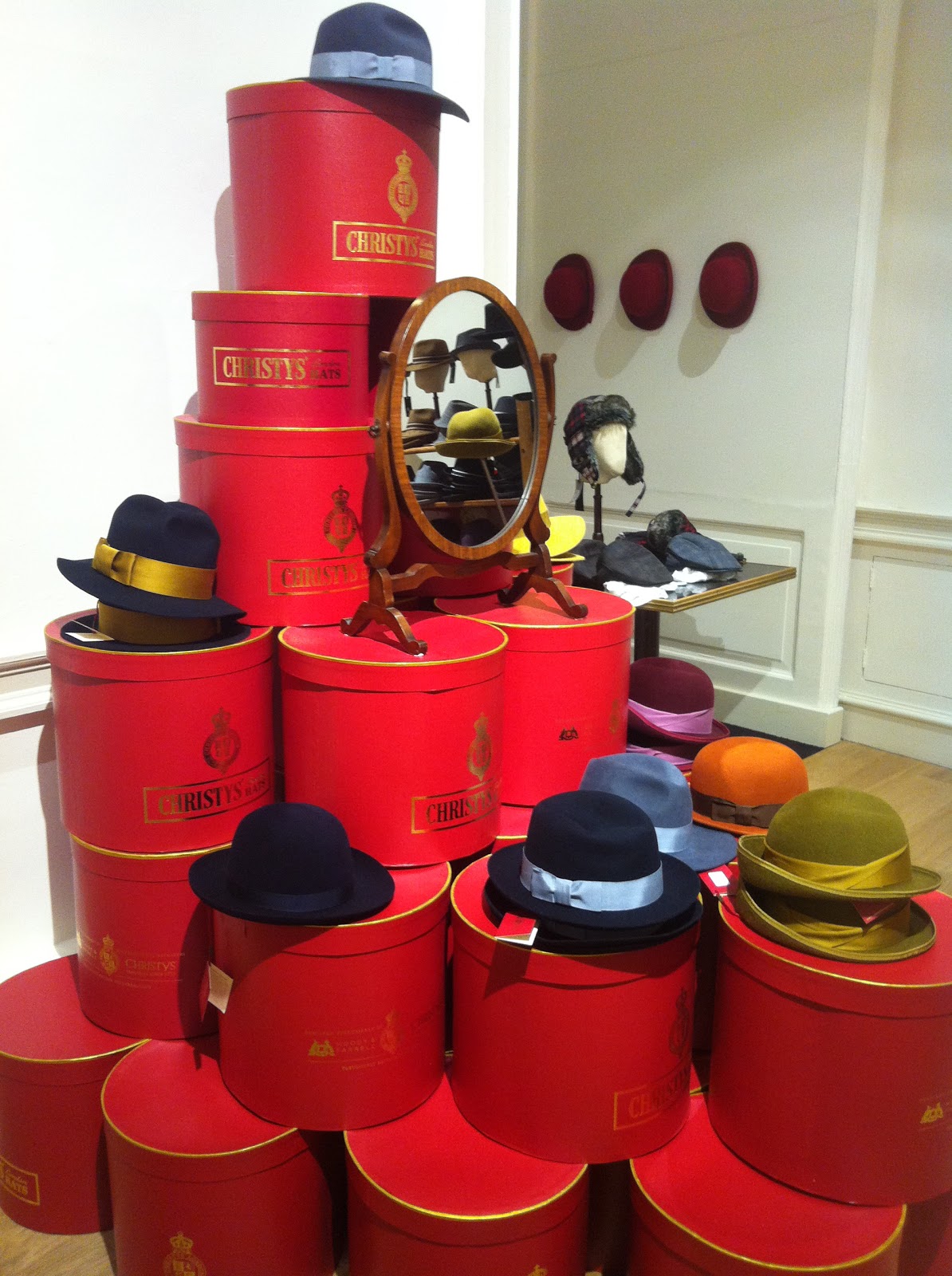
If you're looking for something warmer, less energetic and altogether more indulgent, just soak up the atmosphere as a spectator for a while then amble off indoors into Somerset House's pop-up shopping event, the Christmas Arcade. Gorgeous hats from Christy's, covetable jewellery from Tatty Devine, yummy treats from Hope and Greenwood, cool British fashion and fabulous ceramic pieces, cushions and suchlike for your home.

Wander round with a mince pie and some mulled wine or hot chocolate and start your Christmas wish list off with a little luxury. Go on, you deserve it - after all, you've been good all year, right?


Yours, chilling out with Twitter star Skate Penguin,

Girl About Town xx

Sunday, 25 November 2012

Alternative London tour


Bored of expensive, uninspiring tours? Think tours are for tourists? Forget the freezing open-top buses, the droning guides shoving through crowds with their umbrellas aloft and the same dry old monologues about Big Ben or Tower Bridge; what if a tour could give you an insight into today's real and living London, the chance to discover the East End's most incredible street art alongside enthusiastic local guides - often street artists themselves - and even the chance to (legally) try it for yourself?

Alternative London (beware of bandwagon imitators) offers pay-what-you-like walking tours as well as great value bike tours and tours with hands-on workshops, making this a really different and affordable London experience. I took my teenage niece with her mum for a birthday treat and it opened our eyes to a whole range of incredible art in the maze of East London back streets.

Our guide, street artist Josh Jeavons, was fabulous - friendly, knowledgeable and really happy to explain how graffiti and street art began, how the pieces were created, what kind of techniques were used, and the individual artists' backgrounds and inspirations. http://joshjeavons.co.uk/ Here is just a taste of the things we saw and learned on our day.

Cranio is a Brazilian artist from São Paulo, in town for a recent exhibition at the Red Bull Studios. His distinctive character paintings highlight the tension between the indigenous people of Brazil and the commercial pressures that are leading to deforestation, seriously endangering the rainforest. He was one of the first artists to help decorate the new Alternative London bus, which is the tour company's headquarters and their workshop - a very cool place to work on your stencil skills!

Artists like Mobstr and Ben Eine focus more on typographical pieces; Ben Eine is probably most well-known for his transformation of the shutters in Middlesex Street with huge brightly-coloured letters - or perhaps for the fact that David Cameron gave Barack Obama one of his pieces as a presidential gift.
We saw his fabulous monochromatic Anti Anti Anti graffiti in Ebor Street; apparently the morning after he painted this he was asked if he wanted to paint something on the other side of the street, this time with permission. Keen to have made his mark on the whole street, he painted the contrasting Pro Pro Pro in bright circus font along the opposite wall.

Mobstr specialises in stencilled messages which challenge the inexplicable love of those in authority for a dreary blank wall. The eternal nemesis of the street artist, council employees will post warning notices of prosecution - hence Mobstr's retort 'Didn't Get Arrested' - and will paint over existing art with neutral-coloured paint, known as 'buffing'. Often they only cover as far as they can easily reach, leaving a far uglier  dull wall with the remains of the art still visible at the top; this prompted Mobstr to stencil the taunt 'Buff This . . . And This' high up on a wall in New Inn Yard. So far, they haven't.

I guess no London street art tour would be complete without a Banksy or two - nowadays they are covered with Plexiglass. This one has an Anthony Lister version right next to it, the Australian artist making his point by adding 'Lister is over stencils'.

Banksy's Exit Through the Gift Shop collaborator Shepard Fairey (for more on this, see my August blog post on Mr Brainwash) also figures on the tour; we saw his 'Shoplifters Welcome' indictment of corporate greed dominating a huge wall space.

I could go on, but you know what? Book yourself on the tour and find out for yourself. The workshop option is fabulous as after the tour you get the chance to create your own stencil and/or wield a can freehand, spray-painting your own design onto pieces of board, or the bar.

Here's my London skyline . . .

. . . and my niece's finished piece for her  to take home. I'm setting up a board on Pinterest (check it out with the link at the top of the page) with more pictures and artists but street art is ephemeral, so your tour could look totally different. I'm already booking my next one for a couple of months' time; maybe I'll see you there. Trust me, you'll love it. http://www.alternativeldn.co.uk/


Yours, loving streets as the new galleries,

Girl About Town xx


Tuesday, 13 November 2012

The V&A Café

The V&A Café looks like any other museum or gallery café at first glance; brightly lit, bustling staff clearing trays, signposted stations for hot or cold food, coffee or cakes - and all heavingly busy. A modern, functional place to take the weight off and fortify yourself with tea and cake before venturing back out into the world's greatest museum of art and design (their words, but does any other venue even come close?). Now take a look at the suite of three interlinked rooms off to the side and it's like stepping back in time; together these rooms make up the world's very first museum restaurant and it is a seriously impressive setting.

The Refreshment Rooms at the Victoria and Albert Museum were intended as a showcase for contemporary design and craftsmanship and are a wonderfully Victorian mix of the ornate and the practical. The main central section is the Gamble Room, designed by James Gamble, Godfrey Sykes and Reuben Townroe. Originally the main doors to this room were directly opposite the museum entrance so this would have been the first room visitors saw; even by Victorian standards this must have seemed imposingly grand. Look more closely; the ceiling is enamelled iron and both the walls and the huge columns are completely covered with ceramic tiles, making this most majestic and opulent of dining rooms completely washable and practically fireproof.
Mottoes espousing the joys of food and drink adorn the beautiful stained glass windows and the frieze is a quotation from Ecclesiastes II:24: 'There is nothing better for a man than that he should eat and drink, and make his soul enjoy the good of his labour.' Hard to argue with that.

The Morris Room (the Green Dining Room) was the first major commission for William Morris's company Morris Marshall and Faulkner. The dado panels based on signs of the zodiac were painted by Edward Burne-Jones, who also designed the stained glass windows. The influence of William Morris and his pattern-making is most recognisable in the plasterwork leaves and flowers on the walls (although if you are a Morris fan, the rest of the museum has plenty to offer). This room, although beautiful, has a more restrained, quiet feel.

The Poynter room (the Grill Room) designed by Edward Poynter has a homely cosiness to it, with blue Dutch tiles and wooden panelling. The large tiled panels of the months and seasons were actually painted by students from the ladies' tile-painting class at the Schools of Design; this was very much in keeping with V&A Founding Director Henry Cole's  radical idea of involving students and the public in creating this public space. Giving such an important commission to female students would have caused quite a stir in Victorian times.

The beautiful iron stove where a chef in whites would have grilled steaks and chops to order is still in place; the V&A website has sample menus from 1867 - both first and second class - which include options such as jugged hare for 1/6 (i.e. one shilling and sixpence, or 18p) or, from the second class menu, stewed rabbit for 10d (ten pence). That may sound like a bargain until you consider that an unskilled labourer's wage was about a pound a week.
http://www.vam.ac.uk

Nowadays the catering side is handled by Benugo, so expect freshly-prepared basics and great cakes (although as everything is made fresh on the day, quality and availability can inevitably dip if you arrive too near closing time). I hear the cream tea is good, so that's my next visit sorted.


Yours, scratching the surface of London history just for you,

Girl About Town xx